Why Winter Is the Best Time to Reset Your Skin
Jess Ford | Education & Sales Support Representative
Winter is often perceived as a quieter season in the treatment room. Clients are covered up, UV exposure is lower, and the pace of appointments can feel less urgent than the lead-up to summer. However, for skin professionals who understand the biology of the skin and how it responds to its environment, winter represents something else entirely, it is the most strategically important season of the year for corrective skincare.
This article explores the science behind seasonal skin behaviour, the role of professional chemical exfoliation, and why the approach to acid selection matters far more than most clients, and many practitioners realise.

Understanding Seasonal Skin Biology
The skin is a dynamic, responsive organ, and its behaviour shifts considerably across the seasons. These changes have a direct impact on when corrective treatments can be performed most effectively.
During summer, ultraviolet exposure stimulates melanocytes, the cells responsible for pigment production, as part of the skin's natural defence mechanism. This means that the time clients are most concerned about pigmentation is also the time the skin is actively producing more of it. Performing aggressive corrective treatments during this period can trigger inflammation that stimulates further melanin production, making pigmentation more difficult to manage.
In winter, reduced UV exposure allows melanocyte activity to settle, while lower skin reactivity and improved healing conditions create an ideal environment for corrective treatments. The skin becomes more receptive to active ingredientsand professional procedures, allowing deeper corrective work to be performed with greater confidence, a lower risk of complications, and more predictable, long lasting results.
Simply put, the conditions that make summer challenging for corrective work are the same conditions that make winter the ideal season for it.

The Clinical Rationale for Seasonal Peel Protocols
Professional chemical peels, particularly stronger ethanol based formulations, are best performed during the cooler months.
These treatments are designed to penetrate more deeply and stimulate significant epidermal renewal, making them highly effective for pigmentation correction. However, they also temporarily increase skin sensitivity and require a controlled healing environment with diligent sun protection.
During summer, increased UV exposure and outdoor activity can elevate the risk of post inflammatory hyperpigmentation, where inflammation triggers additional pigment production and compromises treatment outcomes.
For this reason, winter remains the optimal treatment window for deeper corrective peel protocols, allowing clinicians to achieve visible, consistent, and long lasting results while minimising the risk of unwanted pigmentation and other complications.

Rethinking Acid Selection: Moving Beyond Glycolic
Glycolic acid has long held a prominent position in professional skin treatment. Its widespread use is understandable, it is well-researched, widely available, and delivers fast results in the right candidate. However, the assumption that glycolic acid is universally appropriate is one that warrants careful reconsideration.
Glycolic acid is an alpha hydroxy acid (AHA) characterised by a small molecular structure. This allows for rapid, deep penetration, an attribute that can be advantageous in certain clinical scenarios, particularly for fair, resilient skin types with no history of sensitivity or reactivity. However, the speed and depth of that penetration also generates significant inflammatory heat within the skin, and inflammation is now well understood as a primary driver of post-inflammatory hyperpigmentation.
For clients with medium to deeper Fitzpatrick skin tones, those presenting with melasma or hormonal pigmentation, or those with compromised barrier function and reactive skin, glycolic acid carries a genuine risk of exacerbating the conditions it is intended to treat. In these presentations, the clinical evidence increasingly supports the use of alternative acid chemistries, formulations that deliver corrective outcomes without the inflammatory cost.

The Acids That Drive Our Formulation Philosophy
Effective professional peels are not single-ingredient treatments. The most clinically sound formulations are carefully considered blends, with each acid selected for its specific mechanism of action and its contribution to the overall therapeutic outcome.
Mandelic Acid:
Derived from bitter almonds, mandelic acid is a large-molecule AHA whose defining advantage lies in its rate of penetration. Unlike glycolic, mandelic acid absorbs gradually and evenly, exerting its corrective action without generating the acute inflammatory response associated with smaller-molecule acids. The result is meaningful brightening, melanin regulation, and progressive cellular renewal, with a markedly reduced risk of irritation or PIH.
Mandelic acid is one of the few professional peel actives with a well-established safety and efficacy profile across all Fitzpatrick skin types, including deeper skin tones that are frequently excluded from stronger peel protocols. This is the primary reason it sits at the centre of our corrective formulations at Circadia.
Salicylic Acid:
A beta hydroxy acid (BHA) with lipophilic properties, salicylic acid is able to penetrate the sebaceous follicle rather than acting solely at the surface. This makes it particularly effective in presentations involving congestion, active breakouts, and post-acne pigmentation. Its inherent anti-inflammatory action makes it a valuable complement to other acids within a blended formula.
Lactic Acid:
A larger-molecule AHA with a natural humectant quality, lactic acid exfoliates while simultaneously drawing moisture into the skin. It is well suited to dry, dehydrated, and mature skin types, delivering surface brightening and textural refinement without compromising barrier integrity.
Resorcinol:
A targeted depigmenting agent with a long-established role in clinical dermatology, resorcinol disrupts melanin synthesis at a cellular level, contributing a depth of pigment correction that exfoliating acids alone are unable to achieve.
When these actives are formulated in combination, as they are in Circadia's MandeliClear Peel, the result is a comprehensive corrective system that addresses pigmentation through multiple pathways simultaneously, with a safety profile appropriate for a broad range of skin types and tones.

The Case for Mandelic Acid in the Australian Context
The Circadia formulation philosophy is built substantially around mandelic acid, and that decision is grounded in both the science and the specific characteristics of the Australian client demographic.
Australia presents a distinct clinical landscape. Significant year-round UV exposure, a high prevalence of medium to olive skin tones, and a client population frequently dealing with UV-induced pigmentation, sensitisation, and barrier compromise all point toward the need for corrective chemistry that is both effective and measured. The instinct to reach for the most aggressive tool available has not always served this demographic well, and the consequences of barrier disruption and inflammation-triggered pigmentation are well documented.
Mandelic acid offers a different paradigm. It does not ask the skin to tolerate significant inflammatory insults in pursuit of a corrective outcome. Instead, it works with the skin's biology, supporting renewal, regulating melanin activity, and improving tone progressively and sustainably. For the Australian context in particular, it is not simply a considered option. In many presentations, it is the most clinically appropriate one.

The Winter Reset Pigmentation System
The principles outlined above are the foundation of Circadia's Winter Reset Pigmentation System, a structured, phased approach to professional pigmentation correction designed for this season specifically.
Phase One: Preparation (2–4 Weeks)
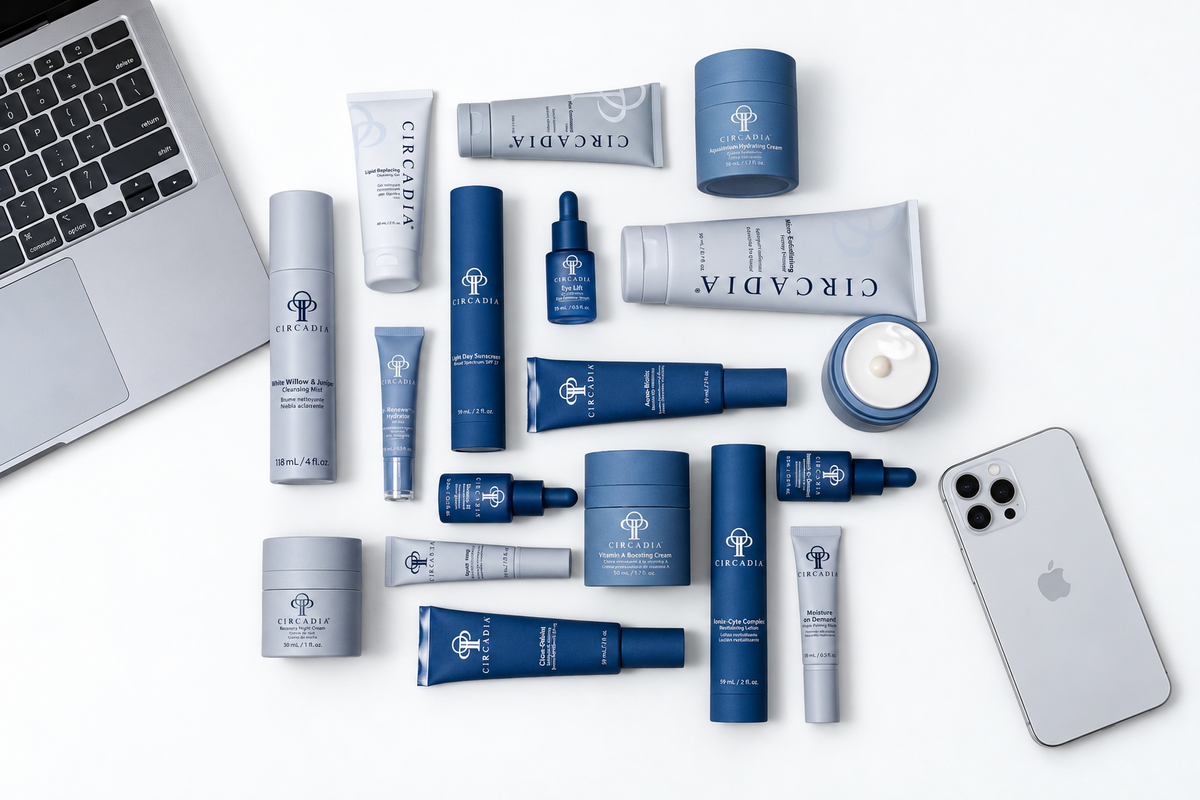
The Winter Reset Bundle, comprising the Amandola Milk Cleanser, Licorice and Bearberry Brightening Mist, and Radiant Veil Brightener, is used to suppress melanin activity, strengthen the barrier, and condition the skin prior to the professional treatment. Preparation is not a preliminary step, it is an integral component of the protocol, and a significant determinant of the final outcome.
Phase Two: In-Clinic Treatment
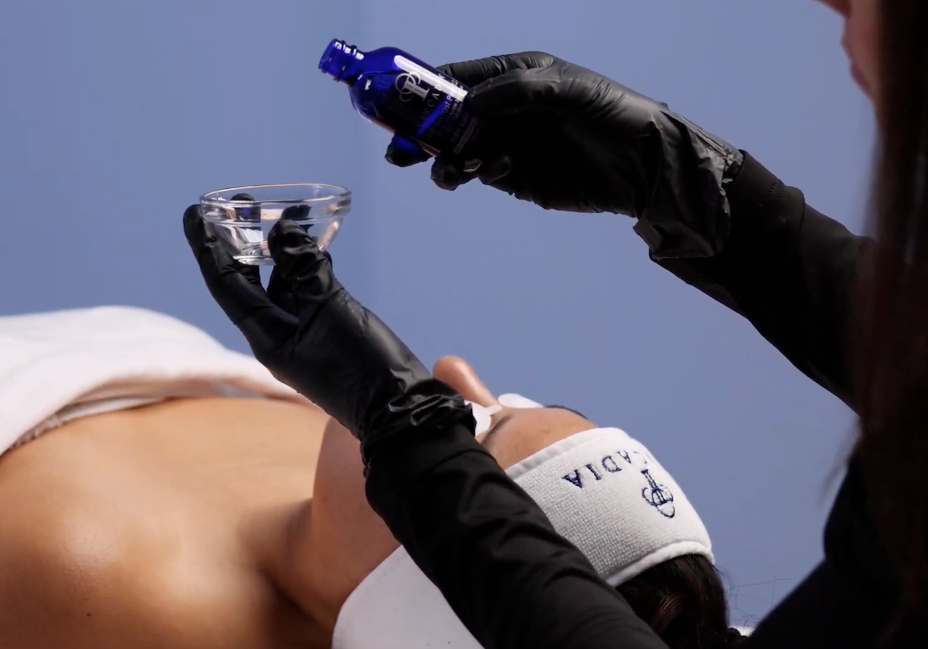
The MandeliClear Peel, administered in conjunction with the Vitamin A Accelerator, delivers the corrective treatment. The Vitamin A Accelerator intensifies the peeling response to accelerate epidermal renewal. Clients should anticipate moderate to significant peeling in the days following treatment, an expected and intentional part of the process.
Phase Three: Post-Treatment Homecare
A structured homecare protocol supports the skin through the renewal phase, incorporating gentle cleansing, targeted corrective serums, barrier-restorative products, and consistent broad-spectrum sun protection throughout.
The Winter Reset Pigmentation System is indicated for clients presenting with melasma, UV-induced sun damage, post-inflammatory hyperpigmentation, and generalised uneven skin tone, including clients with medium to deeper skin tones who have previously been considered unsuitable candidates for stronger peel treatments.
Final Thoughts
The skin you present next summer is, in large part, a product of the decisions made this winter. For practitioners, this season offers a clinical environment that is difficult to replicate at any other time of year, a window of reduced UV, increased cellular receptivity, and optimal conditions for deep corrective work.
Winter is not a period of reduced opportunity. For those equipped with the right protocols and the right chemistry, it is the most productive and impactful season on the treatment calendar.
To learn more about the Winter Reset Pigmentation System or to discuss whether this protocol is appropriate for your clients, speak with your Circadia Australia representative or contact the Circadia Australia team directly.